September 26, 2026 · 4 min read
How to identify oak wood by grain, rays, and pores
How to identify oak wood from wide rays and ring pores, then separate ash and chestnut before the red oak and white oak pages.
By Mario Saputra · Last reviewed September 26, 2026
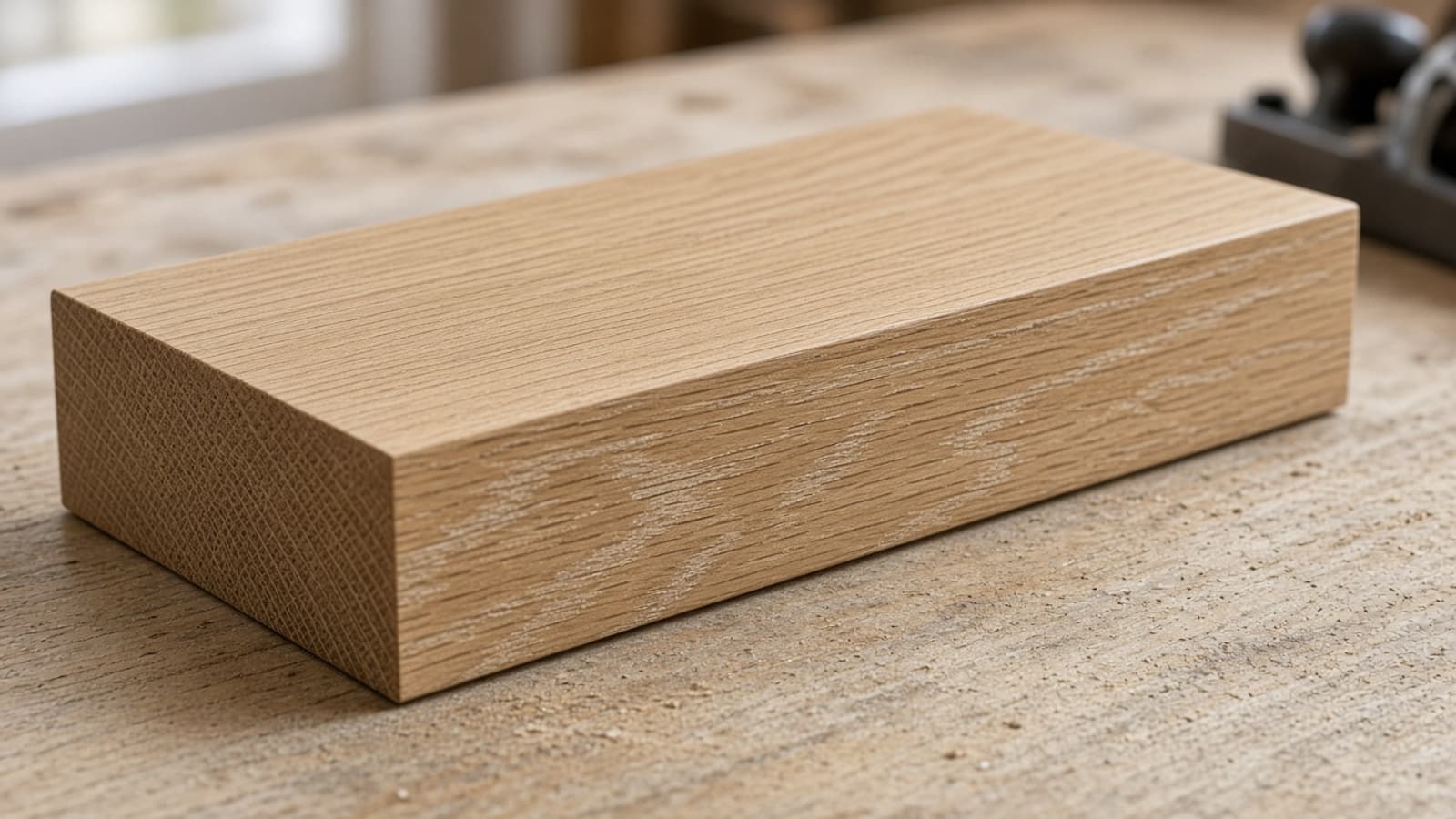
How to identify oak wood starts with two marks that survive stain. Oak has wide rays. Those rays show up as flecks on a quartered face and as pale lines on the end grain. Ash and chestnut can show a similar ring of large pores. Their rays stay narrow, and the quartered face has no oak fleck.
Download Wood Identifier on the App Store when you want a ranked list from a photo of the face and the cut end. Run the checks below before you trust a match. Product details are on the Wood Identifier home page.
What oak shows on the face
Oak face grain is open. The pores leave short grooves along the board. On a plain-sawn face the growth rings form nested curves, the cathedral pattern. On a quarter-sawn face the grain runs straighter, and the rays break the surface as pale flecks.
Heartwood color runs from pale tan to a pinkish brown. Stain can push oak, ash, and chestnut to the same brown. Read the rays before you read the color.
Ray fleck on a quartered face
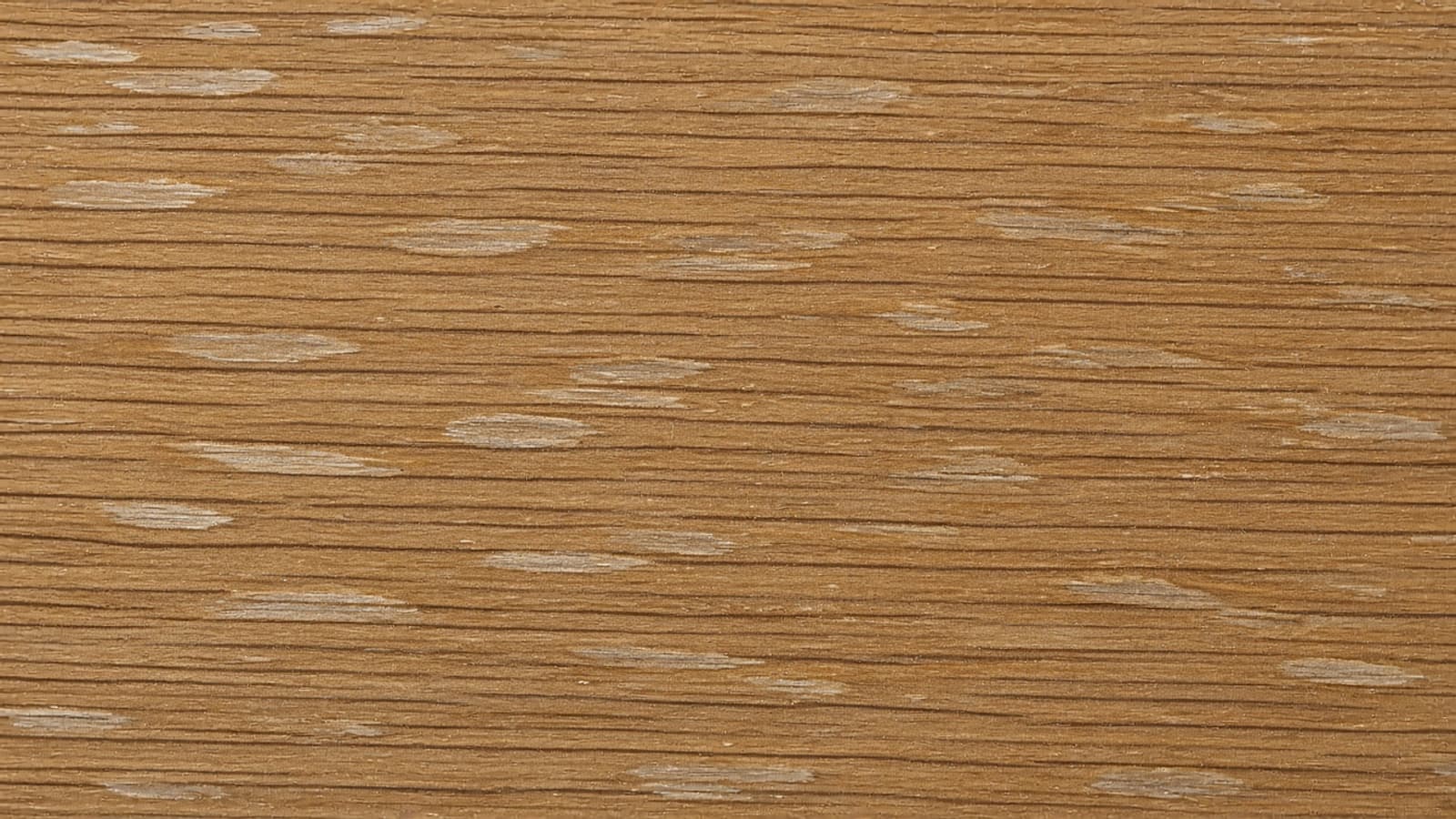
Ray fleck is a wide ray seen from the side. Quarter-sawing slices that ray into a ribbon across the face. Oak is one of the few common furniture woods that shows this fleck without a lens.
Ash rays stay narrow. A quartered ash face looks straight and open, with no ribbons. American chestnut rays are narrow too. Old chestnut boards are often lighter than oak and often carry small insect holes. The fleck still decides the call. Without fleck, check the end grain before you call the board oak.
End grain, pores, and wide rays
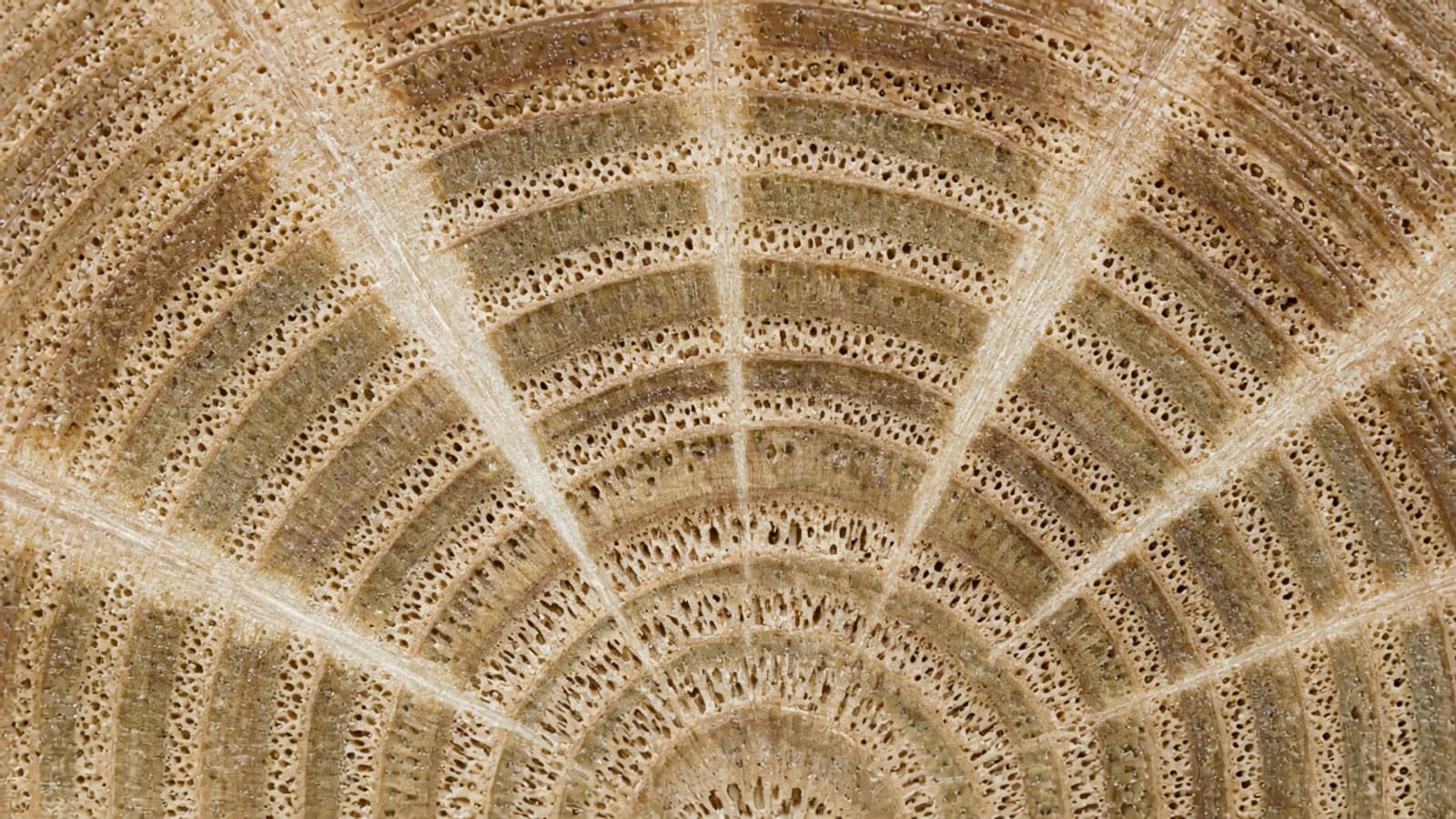
Pare or saw the end of the board so the cut is clean. Sanding packs dust into the holes and hides them. A drop of water darkens the surface and makes the pores easier to see.
Oak is ring-porous. Each growth ring opens with a band of large pores, then smaller pores through the rest of the ring. On that same cut, several rays are wide enough to see as pale lines crossing the rings.
Use that cut to separate the lookalikes.
- Ash is ring-porous, so it also has a band of large pores. Its rays stay thin. The cut shows those thin rays only, and the quartered face has no fleck. More ash cues are on how to identify ash wood.
- Chestnut can copy the oak pore pattern, including smaller pores in a flame shape. Every chestnut ray is narrow. The missing wide ray is the difference. Chestnut is also softer and lighter than oak, so a dent shows up sooner.
- Hickory and elm are other ring-porous hardwoods, and their rays stay narrow too. This page separates oak from ash and chestnut.
A sanded or painted end hides the pores. Pare a fresh slice, or read an unpainted edge, before you name the wood.
A short order of checks
- Find a quartered face, or split one. Look for ray fleck.
- Pare the end grain. Confirm a ring of large pores and at least one wide ray.
- If the pore ring is there and every ray is narrow, treat the wood as ash or chestnut.
- If the fleck and the wide rays are both there, the wood is oak. Split red oak from white oak on the pages below.
Red oak and white oak come next
This guide stops once the wood is oak. Red oak and white oak share the wide rays. The later split is whether the large pores are open or plugged, plus color and use.
- Red oak vs white oak compares the pore test and the uses.
- How to identify red oak covers the open pores and the pinker cast.
- How to identify white oak covers the plugged pores and the water resistance.
Frequently asked questions
Can a photo show how to identify oak wood?
A sharp photo of a quartered face and a fresh end grain can show the fleck and the wide rays. A photo of only the stained face cannot. Take both, in daylight, with the phone held parallel to the wood. Tap the surface to lock focus.
Do both red oak and white oak show ray fleck?
Both show fleck. White oak fleck is often longer, which is why quartersawn white oak is sold as a furniture grade. Fleck places the board in the oak group. The red oak and white oak guides split that group.
Is chestnut the same wood as oak?
Chestnut is a different tree. Its end grain can look like oak until you look for the wide rays. Chestnut does not have them. Many old chestnut boards also show small insect holes that oak boards usually lack.
Where should I look on finished furniture?
Look inside a drawer, under the top, or along an unstained edge. Those spots still show pores and, on a quartered part, fleck. A thick finish on the show face is a poor sample.
Identify oak with a photo
Wood Identifier ranks likely species from a photo. The ray check on a clean cut still comes first.
- Download Wood Identifier on the App Store.
- Photograph the quartered face, then a pared end grain.
- Read the top matches before you buy or mill the board.
Start at the Wood Identifier home page. For the pore and ray vocabulary on any species, read identify wood by end grain.
Identify wood with AI
Snap a photo of lumber, furniture, or grain — the Wood Identifier app helps you recognize the species in seconds.