October 4, 2026 · 12 min read
Identify Birch Wood: Color, Grain, Pores & Plywood
Learn how to identify birch wood by its pale color, fine grain, diffuse pores, plywood faces, and differences from maple and poplar.
By Mario Saputra · Last reviewed October 4, 2026
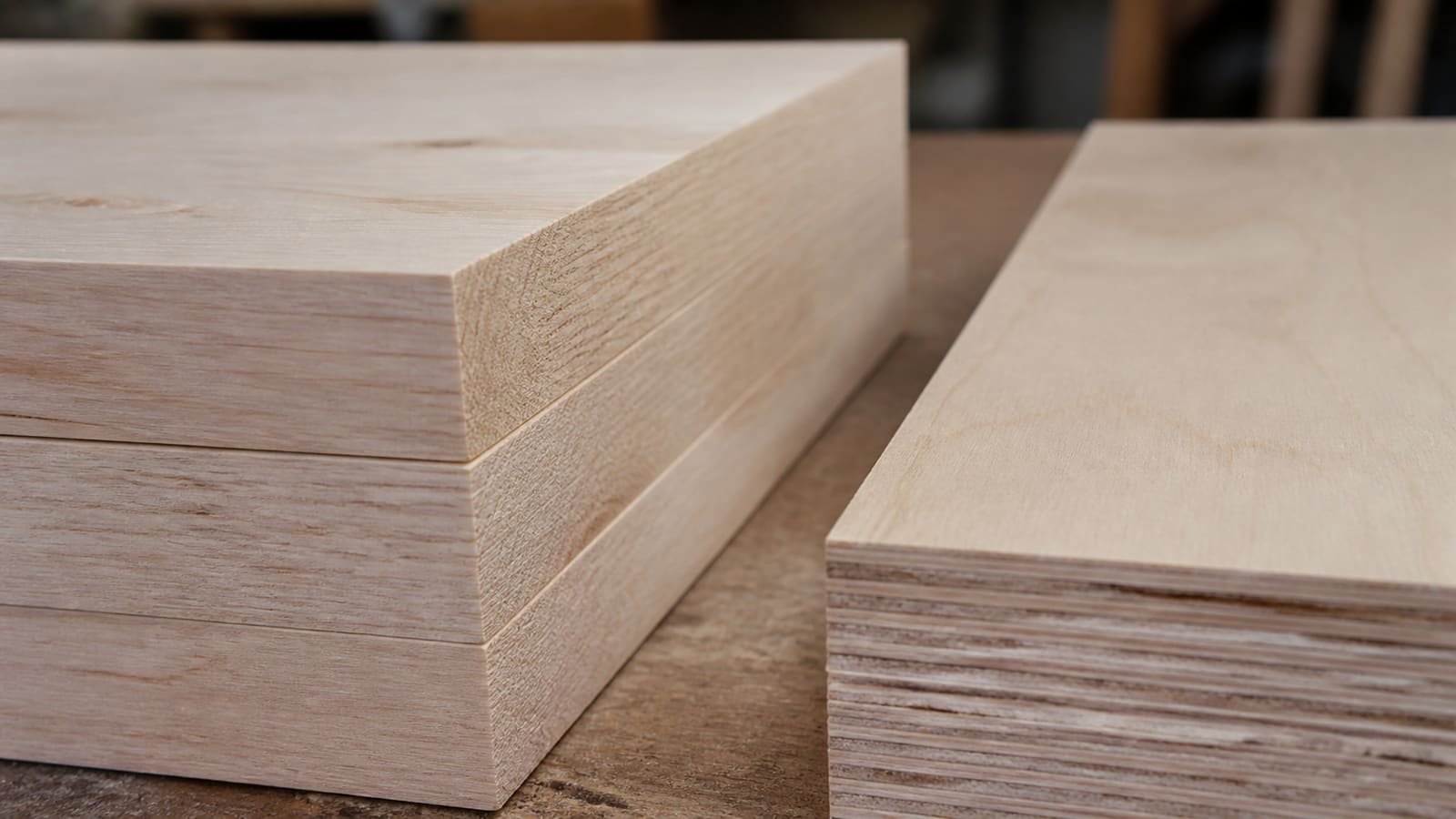
To identify birch wood, look for pale cream to light yellow-brown color, fine and generally straight grain, and tiny pores spread evenly across the end grain. Birch often looks smooth and uniform, but figured grain, amber finishes, and rotary-cut plywood faces can complicate identification. Comparing color, pores, weight, hardness, and unfinished areas helps separate birch from maple and poplar.
What does birch wood look like?
Birch is usually a pale, fine-textured hardwood. Its sapwood can be nearly white, creamy, or light yellow. Heartwood is commonly light brown to reddish brown, particularly in yellow birch. The transition between sapwood and heartwood may be gradual rather than sharply defined.
The grain is usually straight, but some boards show gentle waves, curls, or flame-like figure. Birch has an even surface without the large open pores seen in oak, ash, or mahogany. Sanded birch can feel smooth and dense.
Common visual signs include:
- Cream, ivory, pale yellow, or light tan color
- Fine, even texture with no obvious open pores
- Mostly straight grain with occasional waves or curls
- Subtle growth-ring boundaries
- Small brown flecks or short mineral streaks in some boards
- Reddish or golden heartwood in yellow birch
- A soft amber appearance under old clear finishes
Color alone is not enough. Maple, aspen, basswood, and pale poplar can all resemble birch. Exposure to light, stain, and aged varnish can also turn pale wood yellow or orange.
Birch identification is strongest when color, grain, end grain, weight, and construction details all point to the same answer.
For a wider overview of surface features, see wood grain patterns explained.
How do birch grain and pores help with identification?
Birch is a diffuse-porous hardwood. Its vessels are small and distributed relatively evenly through the growth ring. This differs from ring-porous woods such as oak and ash, which have visible rows of large earlywood pores.
On a clean face-grain surface, birch pores are usually difficult to see without magnification. The surface may appear almost poreless from normal viewing distance. Under a hand lens, tiny vessel openings can become visible, but they remain much smaller than the pores in oak.
The end grain provides better evidence. Cut it cleanly with a sharp blade, then examine it under strong side lighting or a 10x hand lens. Look for:
- Tiny pores of similar size spread across the growth ring
- Growth rings that are visible but not strongly defined by pore size
- Fine rays that are difficult to see without magnification
- A dense, uniform texture
- No obvious bands of large earlywood pores
Birch rays are generally fine and inconspicuous. It does not show the prominent ray fleck associated with quartersawn white oak. Maple also has diffuse pores and fine texture, so pore arrangement may narrow the options without proving birch by itself.
Preparation matters. A saw-cut end can crush fibers and fill pores with dust. Sanding can also smear the surface. A fresh slicing cut usually gives the clearest view. Follow the preparation method in this guide to identifying wood by end grain.
Is it yellow birch or white birch?
“Birch” can refer to several species in the genus Betula. Yellow birch and paper birch, often called white birch, are common North American examples. Trade names are not always consistent, and lumber may be sold simply as birch without a species name.
Yellow birch, Betula alleghaniensis, is an important furniture and cabinet wood. Its sapwood is pale, while its heartwood can range from light reddish brown to deeper golden brown. It is relatively hard, heavy, and strong. Boards selected for pale sapwood may be sold separately from darker heartwood material.
Paper birch, Betula papyrifera, is commonly associated with white, peeling bark. Its wood is typically pale cream to light brown. It is generally lighter and softer than yellow birch, although an isolated board can be difficult to separate visually.
Useful comparisons include:
| Feature | Yellow birch | Paper or white birch | |---|---|---| | Typical wood color | Pale sapwood with golden or reddish-brown heartwood | Creamy white to light brown | | Weight | Often heavier and denser | Often lighter | | Hardness | Typically harder | Typically softer | | Common uses | Cabinets, furniture, flooring, veneer | Turned objects, utility lumber, plywood, pulp | | Visual certainty | Heartwood can help | Pale boards overlap with other birches |
Sweet birch and European birch can add further variation. European birch is especially relevant to imported plywood. Because birch species share fine diffuse pores and similar pale sapwood, species-level identification from face grain alone is often uncertain.
Bark is useful only when it is genuinely attached to the wood. Loose white bark near a board or firewood pile does not prove that the piece came from paper birch. On manufactured furniture and plywood, bark offers no help.
How can you recognize birch plywood faces?
Birch is widely used as a face veneer and as a plywood core material. A pale face does not mean every layer is birch. Decorative plywood can have birch veneer over cores made from other hardwoods, softwoods, or engineered panels.
Rotary-cut birch veneer often has broad, flowing grain. The pattern can resemble loose arches, flames, or repeating waves rather than the restrained straight grain of a narrow solid board. Plain-sliced veneer is more likely to show cathedral shapes, while quartersliced veneer looks straighter.
Check the following areas:
- Exposed edges: Birch plywood often has multiple thin plies. High-quality panels may have a consistent core with few visible gaps.
- Face pattern: Rotary peeling can produce broad, repeated grain that would be unusual across a wide solid board.
- Panel thickness: A thin decorative face over many cross-laminated layers confirms plywood construction.
- Patches and plugs: Utility grades may have repaired face defects, sometimes with oval or football-shaped patches.
- Labels or stamps: When available, manufacturing information is more reliable than color alone.
Baltic birch is a plywood product category, not a single visual grain pattern. It is commonly made with birch face and core veneers and is known for many thin plies. Quality and grading still vary, so inspect the actual edge instead of relying only on a seller’s description.
Do not confuse birch plywood with a birch-look laminate. Laminate has a printed pattern rather than natural pores and grain. The distinction is covered in solid wood vs veneer vs laminate.
Where should you inspect birch cabinetry and furniture?
Finished cabinet doors can hide much of the evidence. Stain changes birch color, and toner may be sprayed over the surface to make several boards look uniform. Old varnish can create a strong amber cast. Inspect protected or unfinished areas whenever possible.
Good inspection points include the back of a door, drawer sides, the underside of a shelf, hinge recesses, screw holes, and damaged corners. These areas may reveal the original pale color and the relationship between the face and core.
Birch was frequently used for cabinet doors, drawer parts, furniture frames, and interior components. It can also be stained to imitate cherry, walnut, or mahogany. Dark-stained birch may still reveal its fine texture because the pores remain much smaller than those of mahogany.
Use the following process:
- Determine whether the part is solid wood, veneer, plywood, or laminate.
- Find a raw or lightly finished area that shows natural color.
- Compare face grain on several components rather than one door.
- Examine an end or edge for tiny diffuse pores.
- Note weight and resistance to a fingernail in an inconspicuous spot.
- Check whether drawer parts and hidden surfaces match the visible face.
- Photograph the raw surface and end grain for comparison or AI analysis.
Different parts of one cabinet may use different species. A cabinet can have birch plywood sides, solid maple face frames, poplar drawer parts, and a printed interior panel. Identify each component separately. More inspection points are covered in the guide to identifying wood furniture.
Is the wood birch, maple, or poplar?
Maple and poplar are two of the most common birch lookalikes. All three can be pale and have subtle pores. The best separation comes from combining texture, color variation, density, grain, and end-grain anatomy.
Birch vs maple
Hard maple is usually creamy white to light reddish brown. It often looks slightly more uniform and can feel harder than yellow birch. Maple grain may show curls, bird’s-eye figure, or small dark pith flecks. Birch can also be figured, so these traits are clues rather than proof.
Both are diffuse-porous hardwoods with small pores. Maple rays can sometimes be more noticeable on a clean quartersawn surface, but they are still much less dramatic than oak rays. Birch often has a warmer yellow or golden cast, especially after a clear finish. Maple may stay whiter at first, then yellow with age.
A hard maple board can resist dents more strongly than birch, but hardness tests are affected by species, moisture, grain direction, and finish. Soft maple overlaps more closely with birch. Review the distinctions between maple groups in hard maple vs soft maple.
Birch vs poplar
Yellow-poplar, also called tulip poplar, is not a true poplar botanically, but it is commonly sold as poplar lumber. It is usually lighter and softer than yellow birch. Its heartwood can show green, gray, brown, purple, or dark mineral streaks. Birch is more often cream, yellow, or reddish brown.
Poplar has a fine texture but tends to dent more easily. Its grain can look bland and uniform, particularly after painting-grade selection. Birch generally feels denser and may have a tighter, more polished surface after sanding.
True poplars such as aspen and cottonwood can also be pale. They are typically softer and lighter than yellow birch. However, weight and hardness should be compared with samples of similar size and moisture content.
| Trait | Birch | Maple | Yellow-poplar | |---|---|---|---| | Pores | Tiny, diffuse | Tiny, diffuse | Small, diffuse | | Usual color | Cream to yellow or reddish brown | Cream to pale reddish brown | Cream with possible green, gray, or brown | | Texture | Fine and even | Fine and even | Fine, sometimes slightly softer-looking | | Relative dent resistance | Moderate to high | Often high, especially hard maple | Lower | | Common panel use | Face and core veneers | Decorative face veneer | Core stock, paint-grade parts, solid lumber |
What is the best step-by-step birch identification test?
No single home test reliably proves birch. A structured sequence reduces the risk of matching one misleading feature.
Start with construction. Determine whether you are looking at solid lumber, a veneer, or plywood. Grain that repeats across several panels may be printed or book-matched veneer rather than solid stock.
Next, inspect a raw surface. Birch should usually fall within a pale cream, yellow, light brown, or reddish-brown range. Ignore stained face grain when a hidden unfinished area is available.
Then examine texture and pores. Birch should not have the large open pores of oak or ash. A clean end-grain view should show small vessels distributed throughout the growth ring.
Compare physical properties last. Yellow birch usually feels substantial for its size and resists easy fingernail dents. Paper birch is lighter and softer, so do not reject birch solely because a sample lacks the density expected from yellow birch.
Photographs can support the process if they show several views. Capture the face grain, a clean end, an unfinished area, and the edge of any panel. Avoid glare from glossy finishes. The Wood Identifier can compare visible grain and color patterns, but construction details and close visual inspection remain important. For better image results, follow these tips for photographing wood for AI identification.
Frequently asked questions
Does birch wood have visible pores?
Birch has pores, but they are very small. On smooth face grain they may be difficult to see without magnification. A freshly cut end-grain surface and a hand lens usually provide the clearest view. The pores should appear diffuse rather than arranged in a prominent earlywood band.
What color is natural birch wood?
Natural birch ranges from nearly white and creamy yellow to light brown. Yellow birch heartwood can be golden or reddish brown. Clear finishes often deepen the yellow tone, while old varnish can make the wood look amber or orange.
Is birch wood hard or soft?
Birch is botanically a hardwood because it comes from a flowering tree. Its working hardness depends on the species. Yellow birch is relatively hard and dense, while paper birch is generally softer. Moisture, grain orientation, and board quality also affect dent resistance.
Why does birch plywood grain look different from solid birch?
Plywood faces are often rotary cut from a log. Rotary peeling produces broad, flowing patterns that differ from the grain seen in a flat-sawn solid board. Veneer selection, matching, sanding, and finishing can further change its appearance.
Can birch be mistaken for maple?
Yes. Both woods can be pale, fine-textured, and diffuse-porous. Maple may be whiter and harder, while birch often has a warmer yellow or reddish cast. These differences overlap, so end grain, unfinished color, density, and multiple photographs should be considered together.
Can an AI wood identifier distinguish birch species?
An AI wood identifier can suggest likely matches from visible grain, color, and pore patterns. It may help separate birch from broad alternatives, especially when given sharp photos of raw face and end grain. Distinguishing yellow birch from paper birch can remain uncertain because their anatomy and color overlap.
Identify wood with AI
Photograph the face grain, a clean end-grain section, and any unfinished cabinet or plywood edge. The Wood Identifier iOS app can analyze these views and suggest possible species for lumber, furniture, cabinetry, and veneers. Download Wood Identifier on the App Store and compare its result with the physical signs described above.
Identify wood with AI
Snap a photo of lumber, furniture, or grain — the Wood Identifier app helps you recognize the species in seconds.